If you’ve ever stood up from your desk after a long workday feeling like someone poured concrete into your back muscles, you understand why office workers experience back pain at rates 40% higher than other professions. It comes down to prolonged sitting and the posture habits most of us develop at our computers.
I learned this the hard way after my 2012 back injury got worse from years hunched over a keyboard. The constant forward head posture, rounded shoulders, and compressed hip flexors from desk work create what I can only describe as a perfect storm of muscle tension, trigger points, and chronic discomfort. While ergonomic chairs and standing desks help, sometimes you need targeted intervention to break up those stubborn knots and restore proper muscle function.
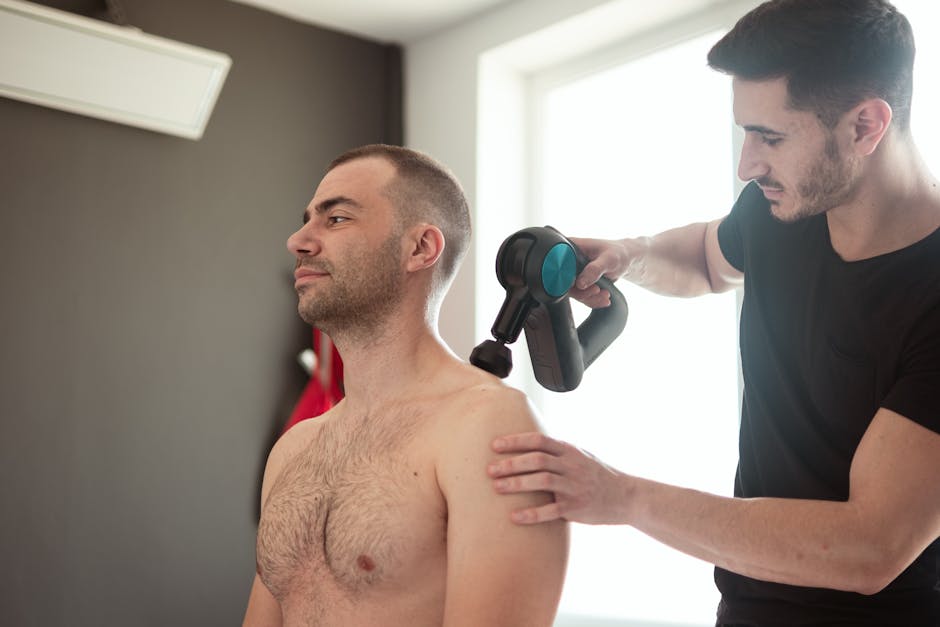
That’s where massage guns come in. These percussion therapy devices have changed how I approach muscle recovery and pain relief, offering desk workers like me an accessible way to combat the physical toll of sedentary work. But with dozens of options flooding the market, choosing the best massage guns for desk workers requires understanding both the technology and your specific needs.
Key Takeaways
Percussion therapy works by delivering rapid pulses to muscle tissue, increasing blood flow and breaking up adhesions that cause desk-related pain
The best massage guns for office workers balance power, portability, and quiet operation for workplace or home use
Different attachment heads target specific areas—ball and bullet heads for trigger points, flat heads for large muscle groups
Upper back tension requires lighter pressure and angled approaches, while lower back can handle deeper pressure
A 10-15 minute post-work massage routine can significantly reduce accumulated tension and prevent chronic pain
Percussion therapy, also known as percussive massage or vibration therapy, works by delivering rapid, concentrated pulses to muscle and soft tissue. These rapid-fire impacts—typically 20 to 60 pulses per second—penetrate deeper than traditional massage techniques, reaching layers of muscle that manual therapy often can’t access effectively.
For desk workers like me, this technology addresses several key issues. Prolonged sitting creates muscle adhesions—areas where muscle fibers stick together due to reduced blood flow and repetitive stress. These adhesions show up as those familiar knots and tight spots that seem impossible to stretch away. Percussion therapy mechanically breaks up these adhesions while simultaneously increasing circulation to flush out metabolic waste products.
How Percussion Therapy Targets Trigger Points
Trigger points—those hypersensitive spots that refer pain to other areas—are particularly common in desk workers’ necks, shoulders, and lower backs. I’ve spent years trying to deal with these through stretching alone. Traditional trigger point release requires sustained pressure, which can be difficult to achieve and maintain through self-massage. Percussion therapy offers a more effective approach by delivering consistent, controlled pressure that gradually releases these tight bands of muscle fiber.
The rapid pulses also stimulate mechanoreceptors in the skin and muscles, which can override pain signals traveling to the brain—a phenomenon known as the gate control theory. This provides immediate relief while the mechanical action works to address the underlying tissue restrictions.
Top Massage Gun Brands for Office Workers
When I was evaluating the best massage guns for desk workers, several brands consistently came out on top based on reliability, effectiveness, and user-friendly features. Each offers unique advantages depending on your specific needs and budget.
Theragun: The Industry Pioneer
Theragun essentially created the consumer percussion therapy market and remains the gold standard for many users. I’ve tested their devices and found that the unique triangular ergonomic design makes it easier to reach awkward spots like the middle of your back—a crucial advantage for desk workers who need self-treatment options.
The brand’s proprietary amplitude (how far the attachment head travels) of 16mm provides deeper muscle penetration than many competitors. For office workers dealing with chronic tension from poor posture, this deeper reach can be the difference between surface-level relief and actually addressing the root cause of discomfort.
Hypervolt: Quiet Power for Any Environment
Hypervolt massage guns excel in one area particularly important to desk workers: quiet operation. Many office workers want to use their massage gun during breaks or immediately after work without disturbing colleagues or family members. Hypervolt‘s QuietGlide technology delivers powerful percussion therapy at whisper-quiet volumes.
The brand also offers excellent battery life and lightweight designs, making them ideal for workers who travel frequently or want a device that won’t add bulk to their laptop bag. The intuitive speed controls make it easy to find the right intensity for different muscle groups throughout your treatment routine.
Bob and Brad: Physical Therapist Approved
Bob and Brad, the famous physical therapist duo, have leveraged their clinical expertise to create massage guns specifically designed around therapeutic principles. Their devices often include detailed treatment guides and educational materials that help users understand proper technique—invaluable for desk workers who may be new to percussion therapy.
What sets Bob and Brad apart is their focus on clinical effectiveness over flashy features. Their massage guns prioritize the therapeutic aspects that actually make a difference for common desk worker complaints like forward head posture, rounded shoulders, and hip flexor tightness.
Choosing the Right Attachment Heads
The effectiveness of any massage gun largely depends on using the correct attachment head for each muscle group and treatment goal. Most quality devices come with multiple attachments, but understanding when and how to use each one maximizes your therapeutic results. I learned this through trial and error over several months.
Attachments for Lower Back Pain
Lower back muscles—including the erector spinae, quadratus lumborum, and glutes—can typically handle more aggressive treatment. The large ball attachment works excellently for broad muscle groups like the glutes and lower erector spinae, providing general relaxation and increased blood flow across wide areas.
For specific trigger points in the lower back, the bullet or cone attachment offers pinpoint precision. This is particularly useful for addressing those deep knots that develop from prolonged sitting and forward hip posture. The dense foam or firm rubber varieties provide enough pressure to release stubborn adhesions without being uncomfortably aggressive.
The flat or paddle attachment serves as an excellent middle ground, covering more area than bullet heads while still providing focused pressure. This attachment works well for the broad expanse of lower back muscles and can be used along the entire length of the erector spinae.
Attachments for Upper Back and Neck Tension
Upper back and neck muscles require more delicate treatment due to their proximity to the spine and the generally smaller muscle mass. The dampener or cushioned ball attachment provides gentler pressure that’s appropriate for sensitive areas like the upper trapezius, levator scapulae, and suboccipital muscles.
Never use percussion therapy directly on the cervical spine or the back of the neck. I learned this from my physical therapist after my disc injury. Instead, focus on the muscle bulk of the upper trapezius and the muscles along the sides of the neck. The U-shaped or fork attachment, when available, can be particularly effective for treating the muscles on either side of the spine without putting pressure on the vertebrae themselves.
Essential Features for Desk Workers
When selecting from the best massage guns for desk workers, certain features become more important than others based on typical usage patterns and work environments. I’ve tested enough of these devices to know what matters most in real-world use.
Portability ranks high for many office workers who want the option to use their device at work, while traveling, or in small living spaces. Look for devices under 2.5 pounds with compact carrying cases. Battery life becomes crucial here—aim for at least 2-3 hours of use per charge to avoid the frustration of a dead device when you need relief most.
Noise level matters significantly for workplace or shared living situations. Devices operating under 50 decibels allow for discreet use during lunch breaks or in hotel rooms without disturbing others. Some newer models operate as quietly as electric toothbrushes while still delivering therapeutic percussion.
Ergonomic design becomes particularly important for self-treatment. Look for devices with angled handles or multiple grip positions that make it easier to reach all areas of your back. Some models include extension handles or unique shapes specifically designed to improve reach and reduce strain during use.
Simple Self-Massage Routine for After Work
Creating a consistent post-work massage routine helps prevent the accumulation of tension and addresses problems before they become chronic pain patterns. This routine takes 10-15 minutes and targets the most common problem areas for desk workers. I developed this after working with two different physical therapists over several years.
Step-by-Step Post-Work Recovery Routine
Start with your glutes (2-3 minutes): Use the large ball attachment on medium speed. Sit on the edge of a chair and work each glute individually, moving slowly across the entire muscle. This helps counteract hip flexor tightness from prolonged sitting.
Address lower back tension (3-4 minutes): Switch to the flat attachment on low-medium speed. Work along each side of your spine from your tailbone to just below your ribcage. Never work directly on the spine itself—stay on the muscle bulk about 2 inches to either side.
Release upper back knots (3-4 minutes): Use the dampened ball attachment on low speed. Focus on the upper trapezius muscles (the meaty part between your neck and shoulders) and work slowly toward the shoulder blades. Have someone help with hard-to-reach spots if possible.
Target specific trigger points (2-3 minutes): Switch to the bullet attachment and work on any specific knots you’ve identified. Use 30-second intervals on each spot, allowing the muscle to relax between treatments.
Finish with neck and shoulder relief (2 minutes): Return to the dampened attachment on the lowest speed. Work the sides of your neck (never the back) and the tops of your shoulders, using gentle circular motions.
Remember that percussion therapy should never be painful—discomfort is normal, but sharp or shooting pain indicates you should reduce pressure or stop treatment. Start with shorter sessions and lower intensities, gradually building up as your muscles adapt to the treatment.
Safety Considerations and Best Practices
While massage guns are generally safe for most users, desk workers should understand proper technique and contraindications to maximize benefits and avoid injury. Never use percussion therapy over bony prominences, directly on the spine, or over areas of acute injury or inflammation. I made some of these mistakes early on and learned the hard way.
Start each session with the lowest speed setting and gradually increase intensity as your muscles warm up. Most therapeutic benefits occur within the first 30-60 seconds of treatment on any given spot—longer isn’t necessarily better and can sometimes cause increased soreness.
If you have any underlying health conditions, particularly cardiovascular issues, blood clotting disorders, or are taking blood-thinning medications, consult with a healthcare provider before beginning percussion therapy. Pregnant women should also seek medical clearance before use.
The Bottom Line
The best massage guns for desk workers combine therapeutic effectiveness with practical features like portability, quiet operation, and ergonomic design. Whether you choose a premium option like Theragun, a versatile model from Hypervolt, or a clinically-focused device from Bob and Brad, the key is consistent use with proper technique.
Remember that percussion therapy works best as part of a comprehensive approach to desk worker wellness. I combine my massage gun routine with regular movement breaks, ergonomic improvements, and strengthening exercises for the best long-term results. The investment in a quality massage gun pays dividends in reduced pain, improved mobility, and better overall work-life balance.
Start by identifying your specific pain patterns and choosing a device that addresses your primary concerns—then commit to a consistent routine that fits into your daily schedule. After dealing with back pain from desk work for over a decade, I can tell you that taking proactive steps makes a significant difference.
Watch: How to Use a Massage Gun for Back Pain
https://www.youtube.com/watch?v=7bgCGElBF3M
Video courtesy of Bob & Brad
Frequently Asked Questions
Do massage guns help with back pain?
Yes, they provide temporary relief from muscle tension through percussive therapy, increasing blood flow and reducing stiffness.
How often should you use a massage gun on your back?
Use for 1-2 minutes per muscle group, 2-3 times daily. Focus on muscles alongside the spine, not directly on vertebrae.
Which massage gun is best for back pain?
Theragun and Hypervolt are top brands. Look for a model with a long handle attachment so you can reach your own back.
Products Mentioned in This Article
As an Amazon Associate, I earn from qualifying purchases. These links help support the site at no extra cost to you.
{“@context”:”https://schema.org”,”@type”:”FAQPage”,”mainEntity”:[{“@type”:”Question”,”name”:”Do massage guns help with back pain?”,”acceptedAnswer”:{“@type”:”Answer”,”text”:”Yes, they provide temporary relief from muscle tension through percussive therapy, increasing blood flow and reducing stiffness.”}},{“@type”:”Question”,”name”:”How often should you use a massage gun on your back?”,”acceptedAnswer”:{“@type”:”Answer”,”text”:”Use for 1-2 minutes per muscle group, 2-3 times daily. Focus on muscles alongside the spine, not directly on vertebrae.”}},{“@type”:”Question”,”name”:”Which massage gun is best for back pain?”,”acceptedAnswer”:{“@type”:”Answer”,”text”:”Theragun and Hypervolt are top brands. Look for a model with a long handle attachment so you can reach your own back.”}}]}
Products Mentioned
As an Amazon Associate, I earn from qualifying purchases. These links help support the site at no extra cost to you.