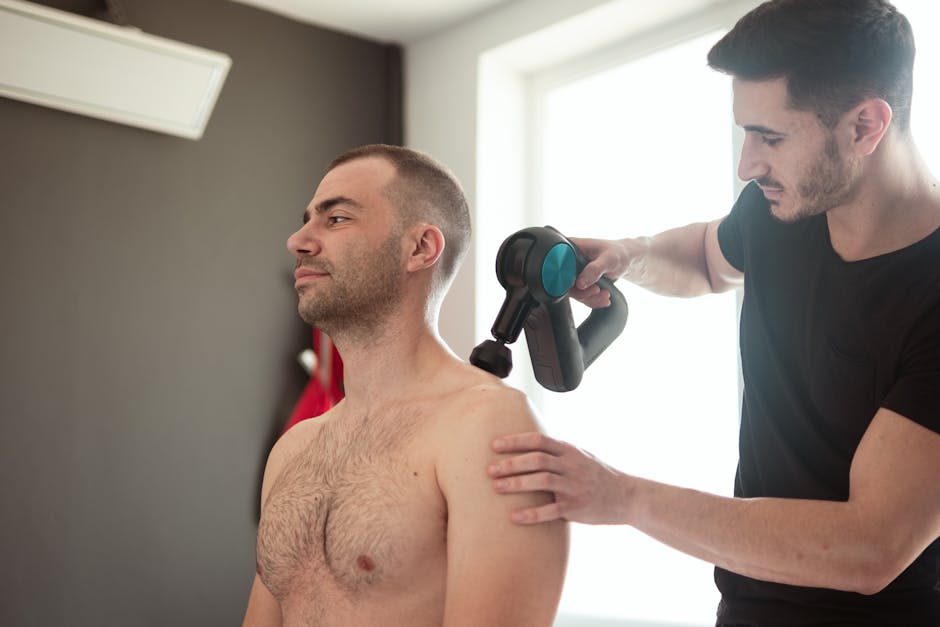
I’ve spent years researching recovery tools after my 2012 back injury and subsequent decade of dealing with desk-related pain. When people ask me about massage guns versus foam rollers, I understand the confusion. You see products like Theragun ($219.99 from Amazon) and Hypervolt all over social media, while physical therapists still swear by the trusty foam roller.
Both tools can be genuinely helpful for desk workers dealing with tight muscles and chronic discomfort. I’ve used both, and each has specific strengths that make sense for different situations and pain patterns. The key is understanding what each tool does well and where it falls short.
Key Takeaways
Massage guns excel at targeted treatment: Perfect for precise muscle knots and trigger points that develop from prolonged sitting
Foam rollers provide broader coverage: Ideal for releasing tension across large muscle groups like your entire back or IT band
Time efficiency varies: Massage guns offer quicker sessions (2-3 minutes per area), while foam rolling requires 10-15 minutes for effectiveness
Budget considerations matter: Quality foam rollers cost $20-60, while effective massage guns range from $100-400
Portability differs significantly: Foam rollers are bulkier but don’t need charging, massage guns are compact but require battery management
What Sitting Does to Your Body
After 12 years of dealing with back pain and studying what happens during long workdays, I can tell you the mechanics are pretty clear. Sitting for extended periods creates specific muscle imbalances that directly contribute to pain patterns most desk workers experience.
When you sit at a desk, your hip flexors get tight and shortened, your glutes basically shut down, and your thoracic spine rounds forward into that hunched position. This creates a domino effect up and down your posterior chain from your neck to your lower back. You end up with muscle knots, trigger points, and fascial restrictions that regular stretching can’t always fix.
This is where recovery tools become necessary rather than optional. Both massage guns and foam rollers work to break up these restrictions, but they do it through different mechanisms with varying degrees of effectiveness for specific issues.
Massage Guns: High-Tech Muscle Relief
Massage guns use rapid pulses (called percussive therapy) to penetrate deep into muscle tissue. The rapid percussion creates a neurological response called “gate control,” where the vibration sensations essentially block pain signals from reaching your brain. This mechanism works particularly well for the specific problem areas desk workers develop.
How They Work for Desk Pain
Massage guns are particularly effective for targeting specific problem areas that develop from desk work:
Trigger points in your upper traps from hunched shoulders
Knots along your rhomboids between your shoulder blades
Tight spots in your erector spinae muscles along your spine
Hip flexor tension that contributes to lower back pain
Theragun: The Premium Choice
Theragun has become the name everyone knows in massage guns. Based on specs, independent reviews, and what users consistently report, it’s easy to see why they’re popular:
Deep amplitude: Usually 12-16mm of depth, reaching deeper muscle layers than cheaper alternatives
Multiple speed settings: Different RPM options for various muscle groups and sensitivity levels
Ergonomic design: Angled handles that make self-treatment much easier
App integration: Guided routines specifically designed for desk workers and back pain
Quality attachments: Various heads designed for different muscle groups and treatment approaches
The downside is obvious: price. Theraguns typically run $199-399, which is a significant investment when you’re not sure if percussive therapy will work for your specific pain patterns.
Hypervolt: More Affordable Alternative
Hypervolt has gained popularity as a more budget-friendly option that doesn’t sacrifice too much performance. According to specs and user reports:
Quieter operation: Less disruptive for office environments or shared living spaces
Good amplitude: Around 12mm depth, which independent reviewers generally consider sufficient for most desk worker needs
Lighter weight: Easier to maneuver during self-treatment sessions
Better value: Typically $100-200 less than comparable Theragun models
Solid battery life: 2-3 hours of use per charge
Massage Gun Advantages for Desk Workers
Precision targeting: You can focus directly on specific trigger points and knots
Time efficiency: 2-3 minutes per area is often sufficient for relief
Easy to use during breaks: Quick treatment sessions between meetings
Reaches difficult areas: Can treat spots you can’t effectively foam roll
Adjustable intensity: Customize pressure and speed for your comfort level
Portable: Easy to bring to the office or travel with
Massage Gun Limitations
Higher cost: Quality devices start around $150
Battery dependence: Need to remember to charge regularly
Noise factor: Can be disruptive in quiet office environments
Learning curve: Takes practice to find optimal pressure and duration
Limited coverage: Treats smaller areas at a time compared to foam rolling
Foam Rollers: The Proven Method
Foam rolling has been a cornerstone of self-myofascial release for decades, and there’s a reason physical therapists still recommend it. This technique uses your body weight and gravity to apply sustained pressure across muscle groups, helping to release fascial restrictions and improve tissue quality.
How Foam Rolling Helps Desk Workers
Foam rolling works through sustained pressure that helps:
Break up fascial adhesions that develop from prolonged sitting postures
Improve blood flow to compressed muscle groups
Restore normal tissue length and mobility
Activate the parasympathetic nervous system for relaxation
Prepare muscles for stretching and movement
Types of Foam Rollers
Smooth Rollers: Best for beginners and general muscle maintenance. Less aggressive but still effective for most desk workers who are just starting out.
Textured/Grid Rollers: Provide more targeted pressure with raised sections that dig deeper into muscle tissue. These are generally considered ideal for chronic tension and stubborn knots.
Firm vs. Soft Density: Firmer rollers provide more pressure but can be uncomfortable for beginners. Softer rollers are gentler but may be less effective for stubborn adhesions that have built up over months or years.
Foam Roller Advantages for Desk Workers
Cost-effective: Quality rollers available for $20-60
No batteries required: Always ready to use
Full-body coverage: Can roll entire back, legs, and sides in one session
Stability and control: Use body weight for consistent pressure
Versatile exercises: Can be used for strengthening and stability work too
Silent operation: Won’t disturb others
Durability: Quality rollers last for years with proper care
Foam Roller Limitations
Time commitment: Effective sessions require 10-15 minutes
Space requirements: Need floor space and room to move
Physical effort: Requires supporting body weight and maneuvering
Less precision: Harder to target specific trigger points
Awkward positions: Some areas are difficult to reach effectively
Potential discomfort: Can be painful, especially when starting out
Direct Comparison
Effectiveness for Common Desk Worker Issues
Upper Back and Neck Tension: Massage guns have the clear advantage here. The precision targeting allows you to work on specific knots between your shoulder blades and along your neck. Foam rollers struggle with the curvature of your upper back and can’t effectively reach many trigger points in this area.
Lower Back Pain: This is more of a tie. Foam rollers excel at releasing the entire erector spinae muscle group and can address broader patterns of tension. Massage guns are better for specific problem spots but might miss the bigger picture of fascial restriction that contributes to ongoing pain.
Hip Flexor Tightness: Foam rollers win this category. The sustained pressure and ability to work the entire length of your hip flexors makes foam rolling more effective for this common desk worker issue that contributes to lower back pain.
IT Band and Lateral Leg Tension: Foam rollers dominate here. The ability to roll the entire length of your IT band and address lateral muscle groups is unmatched by massage guns.
Time and Convenience
For busy desk workers, time is often the deciding factor. Massage guns clearly win in the convenience category:
Can be used while sitting at your desk
2-3 minute treatment sessions are often sufficient
Easy to use during short breaks
No need to change clothes or find floor space
Can target problem areas without full-body session
Foam rolling requires more commitment but provides more comprehensive benefits when you have the time to do it properly.
Cost Analysis
The cost difference is significant and worth considering carefully:
Foam Rollers: $20-60 for quality options
Massage Guns: $150-400 for effective models
When calculated per use over several years, both can be cost-effective compared to regular massage therapy. But foam rollers have a much lower barrier to entry, which matters if you’re not sure whether you’ll stick with a recovery routine.
Best Practices for Each Tool
Massage Gun Techniques for Desk Workers
Start slowly: Begin with lower speeds and shorter durations
Follow muscle fibers: Move along the length of muscles, not across them
Avoid bony areas: Stay on muscle tissue, not bones or joints
Use appropriate attachments: Softer heads for sensitive areas, firmer for deeper work
Time limits: 30 seconds to 2 minutes per area maximum
Listen to your body: Stop if you experience sharp pain or numbness
Foam Rolling Protocols for Desk Workers
Warm up first: Light movement or gentle rolling before aggressive work
Slow and steady: Roll at about 1 inch per second
Pause on tender spots: Hold pressure for 30-60 seconds on knots
Breathe deeply: Don’t hold your breath during painful spots
Stay hydrated: Drink water before and after sessions
Progress gradually: Start with softer pressure and build tolerance
Which Tool Should You Choose?
The decision between a massage gun and foam roller comes down to your specific needs, lifestyle, and budget. Having researched both extensively, here’s how I’d recommend making the choice:
Choose a Massage Gun If:
You have limited time for recovery sessions
Your primary issues are specific trigger points and knots
You want to treat muscles while at your desk
You travel frequently and need portable recovery
You have upper back and neck tension as primary concerns
Budget allows for the higher initial investment
You prefer technology-assisted solutions
Choose a Foam Roller If:
You want comprehensive, full-body muscle release
Budget is a primary concern
You have hip flexor and IT band tightness
You prefer low-tech, reliable solutions
You have 15-20 minutes for dedicated recovery sessions
You want a versatile tool for exercises beyond muscle release
You’re just starting your recovery journey
Using Both Tools
Many desk workers find that combining both tools provides the most comprehensive solution. I use a massage gun for quick daily maintenance and trigger point work, while incorporating foam rolling sessions 2-3 times per week for broader muscle group treatment.
If you’re considering this approach, I’d recommend starting with a quality foam roller to establish good self-care habits, then adding a massage gun later as your recovery routine becomes more sophisticated.
Specific Product Recommendations
Based on desk worker needs and value considerations:
Best Overall Massage Gun:Theragun Prime offers the sweet spot of features and price for most desk workers, with excellent build quality and sufficient power without premium model costs.
Best Budget Massage Gun:Hypervolt Go provides good percussion therapy in a compact, affordable package perfect for desk workers who want to try the technology without major investment.
Best Foam Roller:TriggerPoint Grid foam roller strikes the perfect balance of texture, firmness, and durability for desk worker needs.
Best Budget Foam Roller: A basic smooth, medium-density roller from any reputable fitness brand will serve most desk workers well for under $30.
Building Your Recovery Routine
Regardless of which tool you choose, consistency matters more than perfection. Here’s how to build sustainable habits:
Daily Maintenance (5 minutes): Use your chosen tool to address immediate tension and stiffness. Focus on problem areas that developed during your workday.
Weekly Deep Sessions (15-20 minutes): Dedicate longer sessions to comprehensive muscle release, addressing patterns and compensations that build up over time.
Integration with Other Strategies: Recovery tools work best as part of a comprehensive approach that includes regular movement breaks, ergonomic improvements, and strengthening exercises.
My Take
Both massage guns and foam rollers can be highly effective for managing desk worker back pain, but they excel in different areas. Massage guns offer precision, convenience, and time efficiency, making them ideal for busy professionals who need quick relief from specific problem areas. Foam rollers provide comprehensive muscle release, excellent value, and proven effectiveness for broader tension patterns.
For most desk workers just starting their recovery journey, a quality foam roller represents the best value and learning opportunity. You can develop good self-care habits, understand your body’s patterns, and build a foundation for long-term back health without significant financial investment.
But if time is your most limited resource and you’re dealing primarily with upper back and neck tension, a massage gun might be the more practical choice. The key is choosing a tool you’ll actually use consistently rather than the theoretically “best” option that sits unused.
No recovery tool can completely compensate for poor posture, lack of movement, or inadequate ergonomics. Use these tools as part of a comprehensive approach to managing desk worker back pain, and don’t hesitate to consult with a healthcare provider if your symptoms persist or worsen despite consistent self-care efforts.
As an Amazon Associate, I earn from qualifying purchases. These links help support the site at no extra cost to you.
Frequently Asked Questions
How long do I need to use each tool to see results for my back pain?
Massage guns require 2-3 minutes per targeted area for effective treatment, making them ideal for quick relief during work breaks. Foam rolling sessions need 10-15 minutes to be effective, as you work larger muscle groups with sustained pressure. For busy desk workers, massage guns offer faster results, but foam rolling provides more comprehensive coverage when you have time for longer sessions.
Which tool is better for targeting specific knots between my shoulder blades?
Massage guns excel at targeting specific trigger points and knots between your shoulder blades. Their precision allows you to focus directly on problem areas in your upper traps and rhomboids that develop from hunched shoulders. Foam rollers struggle with the curvature of your upper back and can’t effectively reach many of these specific trigger points that desk workers commonly experience.
Can I use either tool at my office during work breaks?
Massage guns are more office-friendly due to their portability and quick 2-3 minute treatment sessions that fit easily between meetings. But they can be noisy and require battery charging. Foam rollers need floor space and 10-15 minutes of time, making them impractical for most office environments, though they operate silently and don’t need power.
What’s the realistic budget difference between these recovery tools?
Quality foam rollers cost $20-60 and can last for years with proper care, making them very budget-friendly. Effective massage guns range from $100-400, with popular models like Theragun at $199-399 and Hypervolt alternatives at $100-200. The initial investment for massage guns is significantly higher, but both tools can provide long-term value for desk workers dealing with chronic tension.
Do these tools actually help with the hip flexor tightness I get from sitting all day?
Foam rollers are more effective for hip flexor tightness that develops from prolonged sitting. The sustained pressure and ability to work the entire length of your hip flexors makes foam rolling superior for this common desk worker issue. Massage guns can target specific tight spots in your hip flexors but may miss the broader patterns of tension that contribute to lower back pain.
Products Mentioned
As an Amazon Associate, I earn from qualifying purchases. These links help support the site at no extra cost to you.