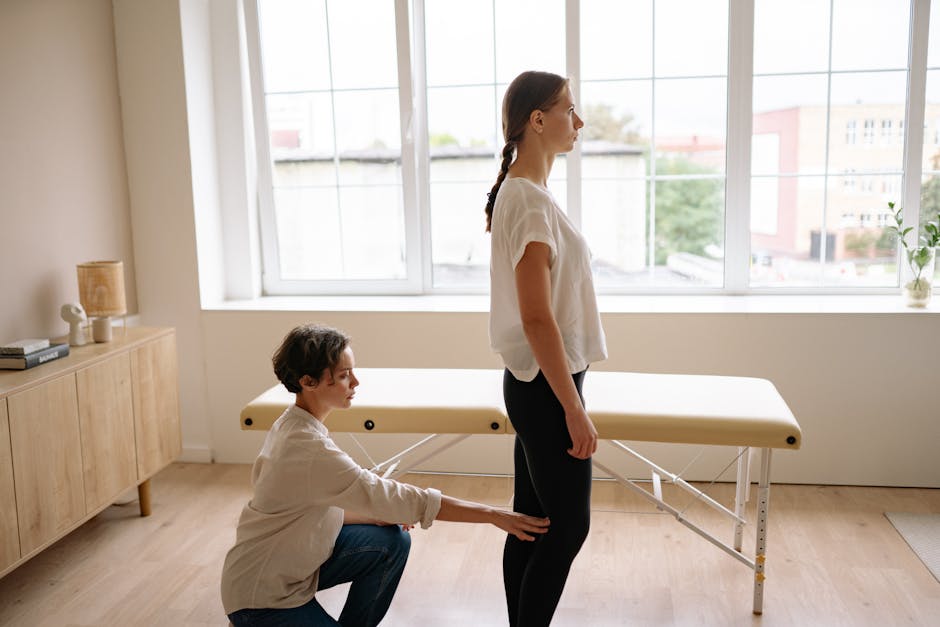
I first noticed my own anterior pelvic tilt in 2015, about three years after my back injury. I was looking at photos from a work conference and couldn’t figure out why I looked so uncomfortable standing there. My lower back had this pronounced arch, and my stomach seemed to push forward despite being in decent shape. It took me a while to connect this postural change to all those hours I was spending hunched over my computer, but once I understood the mechanism, the solution became clearer.
Anterior pelvic tilt happens when your pelvis rotates forward, which creates that exaggerated curve in your lower back and pushes your stomach and hips forward. The main culprit for desk workers like me is the muscle imbalance that develops from sitting for 8+ hours a day. Your hip flexors get chronically tight from being in that bent position, while your glutes essentially shut off from lack of use.
After spending the better part of two years working with physical therapists and testing different approaches, I’ve found that addressing anterior pelvic tilt from desk work comes down to a systematic approach: stretching the tight muscles, strengthening the weak ones, and making some practical changes to how you work. The good news is that this condition responds well to the right interventions if you’re consistent about it.
What I’ve Learned Works
Anterior pelvic tilt from desk work develops due to tight hip flexors and weak glutes from prolonged sitting
Specific stretching exercises targeting hip flexors, quadriceps, and lower back muscles are essential for correction
Strengthening your glutes, core, and hamstrings helps restore proper pelvic alignment
Workplace ergonomic adjustments can prevent the condition from worsening throughout your workday
Movement breaks every 30-45 minutes are crucial for maintaining healthy posture
Consistent daily practice of corrective exercises yields the best long-term results
Why Desk Work Creates This Problem
Anterior pelvic tilt is basically your pelvis rotating forward from its neutral position. When this happens, the front of your pelvis drops lower than the back, which creates a chain reaction through your entire posture. Your lower back gets pulled into an excessive arch, your shoulders often round forward to compensate, and you end up with that characteristic “stomach forward, butt out” stance.
The mechanism behind anterior pelvic tilt from desk work is straightforward once you understand it. When you sit for extended periods, your hip flexors (the muscles at the front of your hips) stay in a shortened position for hours at a time. Over months and years, they adapt to this length and become chronically tight. At the same time, your glutes go into what I call “hibernation mode” because they’re not being used to stabilize your pelvis while you’re sitting.
The Three-Part Problem
I’ve found it helpful to think about this as three interconnected issues. First, your tight hip flexors literally pull the front of your pelvis downward. Second, your weak glutes can’t provide the opposing force needed to keep your pelvis in neutral alignment. Third, your lower back muscles often get tight and overactive from trying to compensate for the poor positioning, which locks the whole pattern in place.
This doesn’t happen overnight. In my case, I can trace the development back over several years of increasingly sedentary work. The tricky part is that you often don’t notice it until the associated back pain becomes significant or someone points out your posture in photos.
Stretches That Actually Make a Difference
I’ve tried dozens of different stretches over the years, and some are definitely more effective than others for addressing anterior pelvic tilt from desk work. The key is targeting the specific muscles that get tight from prolonged sitting: hip flexors, quadriceps, and the muscles in your lower back that compensate for poor posture.
Hip Flexor Stretches
The low lunge stretch has been my go-to for hip flexor tightness. I start in a lunge position with my right foot forward, then drop my left knee to the ground. The important part is pushing my hips forward while keeping my torso upright. I can feel the stretch right in the front of my left hip where all that tightness builds up from sitting. I hold this for 30-60 seconds and repeat on both sides.
When I really want to target the deeper hip flexors, I use what’s called the couch stretch. I place my back foot up on my couch (or a chair in the office) while maintaining that lunge position. This elevated position intensifies the stretch and gets to muscles that the basic lunge might miss. Fair warning: this one can be intense if you’ve been sitting a lot.
Quadriceps and Lower Back Work
Your quadriceps, particularly the rectus femoris muscle, attach directly to your pelvis and can contribute to anterior tilt when they’re tight. I use a standing quad stretch where I grab my ankle behind me and pull my heel toward my glutes while keeping my knees close together. The key is not to let your knee drift out to the side, which reduces the effectiveness.
For lower back tension, I’ve found child’s pose from yoga to be remarkably effective. I kneel on the ground, sit back on my heels, then reach my arms forward while lowering my chest toward the floor. This position stretches the entire back side of my body while giving my spine a chance to decompress from all that sitting.
Strengthening the Right Muscles
Stretching only addresses half the problem with anterior pelvic tilt from desk work. The other half is strengthening the muscles that have become weak and inactive from prolonged sitting. I focus on three main areas: glutes, core muscles, and hamstrings. These provide the opposing forces needed to counteract tight hip flexors and maintain proper pelvic alignment.
Getting Your Glutes Working Again
Glute bridges are the foundation of my strengthening routine. I lie on my back with knees bent and feet flat on the floor, then squeeze my glutes and lift my hips up until I have a straight line from my knees to my shoulders. The trick is really focusing on using my glutes to do the lifting rather than letting my hamstrings take over, which they love to do.
Once I got comfortable with basic glute bridges, I progressed to single-leg versions. These are significantly more challenging and help address any left-right imbalances that might be contributing to postural problems. I typically do 8-12 repetitions per side, focusing on maintaining level hips throughout the movement.
Core Stability Training
A strong core provides the foundation for proper pelvic positioning. Dead bugs have become one of my favorite exercises because they teach your core to maintain stability while your arms and legs move independently. I lie on my back with arms extended toward the ceiling and knees bent at 90 degrees, then slowly lower one arm overhead while extending the opposite leg.
Planks are also valuable, but I’ve learned that form matters more than duration. I focus on maintaining a neutral spine position during planks, avoiding both excessive arching and rounding of my lower back. A 30-second plank with perfect form beats a 2-minute plank with compensation patterns.
My Daily Routine
Consistency has been the most important factor in addressing my anterior pelvic tilt from desk work. I’ve developed a routine that takes about 15-20 minutes total throughout the day, broken into manageable chunks that fit around my work schedule.
Morning activation (5 minutes): I do 2 sets of 10 glute bridges and hold a 30-second hip flexor stretch on each side
Midday break (5 minutes): 10 standing quad stretches per leg and 5 deep squats to counter prolonged sitting
Evening routine (10 minutes): Full strengthening circuit including glute bridges, dead bugs, and planks, followed by comprehensive stretching
I set reminders on my phone for the midday breaks because I’ll definitely forget otherwise, especially when I’m deep in a project. The morning and evening routines have become habit at this point, but it took about 3-4 weeks of forcing myself before they felt automatic.
I track my progress by taking side-view photos every two weeks. It’s not the most glamorous method, but it’s objective and helps me see changes in my lower back curve and hip position that I might not notice day to day. Most people start seeing improvements around the 4-6 week mark if they’re consistent.
Workspace Changes That Help
Even the best exercise routine won’t fully address anterior pelvic tilt from desk work if you’re spending 8+ hours daily reinforcing the problem. I’ve made several changes to my workspace setup that work together with the exercises to speed up progress and prevent backsliding.
Adjusting Your Chair Setup
Chair height makes a bigger difference than I initially realized. I adjust my seat so my hips sit slightly higher than my knees, which helps prevent my hip flexors from staying in that shortened position all day. If your chair doesn’t go low enough (mine didn’t), a footrest works just as well to get the right knee angle.
I also invested in a standing desk converter after my PT recommended alternating positions throughout the day. I alternate between sitting and standing roughly every 45 minutes to an hour. When standing, I focus on engaging my glutes and avoiding the tendency to lock my knees, which can create its own problems.
Building Movement Into Your Workday
The most effective change I’ve made is integrating movement throughout my workday rather than trying to compensate with longer exercise sessions after work. I set a timer for every 45 minutes and use those breaks for 2-3 minutes of simple stretches, a quick walk around the office, or a few glute activation exercises.
When possible, I take walking meetings or use a stability ball for short periods instead of my regular chair. These aren’t major lifestyle overhauls, but they add up to significant changes in how much time I spend in any single position throughout the day.
What I’ve Learned About Progress and Mistakes
Correcting anterior pelvic tilt from desk work takes patience. I made several mistakes early on that slowed my progress, and I see other people making the same errors when they’re getting started with corrective exercises.
The biggest mistake I made initially was focusing almost entirely on stretching while neglecting the strengthening component. I spent weeks doing hip flexor stretches religiously but saw minimal improvement because my weak glutes and core muscles couldn’t maintain better positioning. You need both flexibility and strength to see lasting changes.
Form matters more than volume with these exercises. I’d rather see someone do 5 perfect glute bridges that properly activate the target muscles than 20 sloppy repetitions that reinforce compensation patterns. This is particularly true for core exercises, where poor form can actually make postural problems worse.
Some muscle soreness is normal when you start activating muscles that have been dormant for months or years. However, sharp pain or persistent discomfort suggests you might need to modify your approach or get some professional guidance. I worked with a physical therapist initially to make sure I was on the right track, which probably saved me several weeks of trial and error.
Common Questions About Anterior Pelvic Tilt
How quickly can I expect to see improvements in my anterior pelvic tilt if I do these exercises consistently?
In my experience, most people start noticing improvements around 4-6 weeks of consistent daily practice. The timeline really depends on how consistent you are with the exercises and how long you’ve had the problem. I tell people to take side-view photos every two weeks because the changes can be subtle day-to-day but more obvious when you compare photos from a month apart.
Can I do these corrective exercises at my office, or do I need to go to a gym?
Most of these exercises work fine in an office setting with no equipment needed. I do standing quad stretches, hip flexor stretches, and deep squats right next to my desk throughout the day. Even glute bridges can be done in a private office or break room using just floor space. The only exercise that might be awkward in an office is child’s pose, but you can substitute other lower back stretches.
Why do my glutes feel weak even though I walk regularly and consider myself active?
This was confusing for me too. Prolonged sitting essentially causes your glutes to shut down from lack of proper activation, even if you’re active outside of work. The constant bent-hip position from desk work creates muscle imbalances where your hip flexors become tight and dominant while your glutes become weak and inactive. Walking doesn’t specifically target the glute activation patterns needed to counteract sitting posture.
How often should I take movement breaks during my workday to prevent my posture from getting worse?
I aim for movement breaks every 30-45 minutes, which seems to be the sweet spot for preventing stiffness from building up. These don’t need to be long breaks – even 2-3 minutes of standing, stretching, or doing a few corrective exercises makes a difference. I set phone reminders because I’ll definitely forget during busy work periods when I’m most likely to stay glued to my chair for hours.
Is anterior pelvic tilt permanent, or can it be completely corrected with these exercises?
Anterior pelvic tilt from desk work is definitely not permanent. Since this condition develops from muscle imbalances caused by prolonged sitting, addressing those imbalances through targeted stretching and strengthening can restore proper pelvic alignment. In my case, I’ve seen significant improvement, though I have to maintain the corrective routine and ergonomic practices to prevent it from returning.
Where to Go From Here
Anterior pelvic tilt from desk work responds well to the right approach, but it requires consistent effort over several weeks to see significant changes. The combination of targeted stretching, strengthening exercises, and workspace modifications I’ve outlined addresses both the symptoms and the underlying causes of the problem.
Most people start experiencing reduced back pain and improved posture awareness within the first few weeks of implementing these strategies. The visible postural changes typically take 6-8 weeks to become apparent, which matches what I experienced during my own correction process.
Consistency matters more than perfection with this condition. Even if you can only manage 10 minutes of corrective exercises daily, that’s infinitely better than doing nothing. I started with just the basic hip flexor stretches and glute bridges, then gradually added other exercises as those became routine.
Set aside 15 minutes tomorrow morning to try your first session of hip flexor stretches and glute bridges, then schedule a few movement breaks throughout your workday. The hardest part is getting started, but the payoff in terms of reduced pain and improved posture makes the effort worthwhile.
Watch: Fix Anterior Pelvic Tilt
Video courtesy of Bob & Brad
Products Mentioned in This Article
As an Amazon Associate, I earn from qualifying purchases. These links help support the site at no extra cost to you.