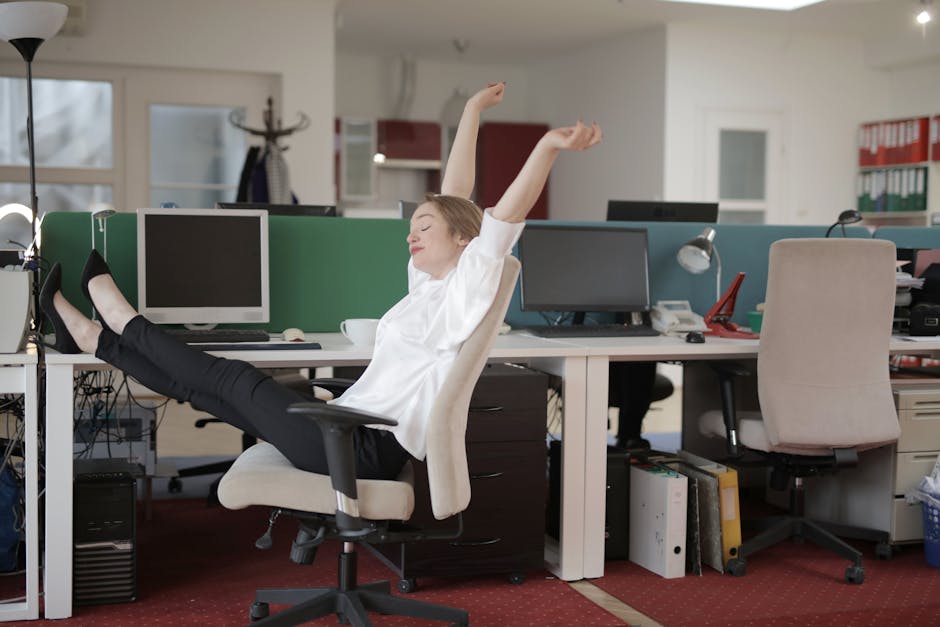
After 12 years of dealing with chronic back pain from sitting at a desk, I’ve worked through every stretch, gadget, and technique I could find. These five stretches are the ones that actually work. You can do them right at your desk without changing clothes or clearing floor space.
Sit up straight in your chair. Put your right hand on your left knee and twist your torso to the left. Hold it for 20-30 seconds, then switch sides. This targets the thoracic spine and obliques — the first muscles to lock up when you’re hunched over your keyboard for hours. I noticed the difference in my mid-back stiffness within a few days of doing this consistently.
2. Hip Flexor Stretch
Stand up and step your right foot back into a shallow lunge position. Tuck your pelvis forward slightly until you feel the stretch in the front of your right hip. Hold for 30 seconds per side. Tight hip flexors are the number one hidden cause of lower back pain in desk workers. When your hip flexors are shortened from sitting, they pull on your lumbar spine and create that nagging lower back ache.
3. Cat-Cow (Seated Version)
Put your hands on your knees. Breathe in and arch your back, pushing your chest forward (cow position). Breathe out and round your back, tucking your chin toward your chest (cat position). Do this 10 times. This mobilizes your entire spine from cervical to lumbar. I consider this the single best movement for desk workers because it reverses all the bad positioning we do while typing.
4. Chest Opener
Clasp your hands behind your back, straighten your arms, and lift them slightly while squeezing your shoulder blades together. Hold for 20 seconds. This directly counteracts the forward-shoulder position that causes upper back and neck pain. Your pectoral muscles get shortened and tight from leaning forward all day, and this stretch opens them back up.
5. Figure-Four Stretch
While seated, cross your right ankle over your left knee. Gently press your right knee down and lean forward slightly. Hold for 30 seconds per side. This targets the piriformis muscle — a deep glute muscle that runs close to your sciatic nerve. When it’s tight from sitting, it can create symptoms that feel exactly like sciatica.
Make It a Routine
Set a timer for every 90 minutes. Run through all five stretches — the whole routine takes less than 5 minutes. I’ve been doing this for three years now, and my back feels noticeably better by the end of the first week whenever I restart the routine after getting lazy about it. The key is the timing. Every 90 minutes prevents the muscles from getting locked into that shortened position.
Watch: Best Desk Stretches for Office Workers
Video courtesy of Tone and Tighten
Products Mentioned in This Article
As an Amazon Associate, I earn from qualifying purchases. These links help support the site at no extra cost to you.
How often should I do these desk stretches throughout my workday?
I recommend setting a timer for every 90 minutes and running through all five stretches. The complete routine takes less than 5 minutes, so it fits easily into your work schedule. The consistent timing is what builds the habit and prevents your muscles from tightening up again between stretch sessions.
Can I really do these stretches while wearing office clothes?
Yes, I designed this list specifically for regular office clothes. All five stretches work in business attire without getting on the floor or requiring excessive movement. Even the standing hip flexor stretch only needs a small step back that won’t wrinkle your outfit.
Which of these stretches is most important if I only have time for one?
If I had to pick just one, I’d go with the seated cat-cow stretch because it mobilizes your entire spine. But honestly, the hip flexor stretch runs a close second since tight hip flexors are the number one hidden cause of lower back pain in desk workers. I’d try to make time for both of those at minimum.
How long will it take before I notice improvement in my back pain?
In my experience, you should feel noticeably better by the end of the first week if you do all five stretches every 90 minutes consistently. The immediate relief comes from releasing tension in the muscles that tighten during sitting. The longer-term benefits develop as you maintain the routine and prevent the daily buildup of tension.
What makes these specific stretches effective for desk-related back pain?
These stretches target the exact muscles that tighten during long sitting sessions: hip flexors, thoracic spine, obliques, chest muscles, and the piriformis. Each stretch addresses a specific problem caused by prolonged sitting — forward head posture, rounded shoulders, and hip flexor tightness. I hurt my back in 2012 lifting concrete during a backyard remodel, which left me with L4-L5 disc degeneration and a mild, non-surgical rupture, and years of poor posture at a keyboard made it worse. That experience pushed me to dig into which muscles actually cause the most problems for desk workers.