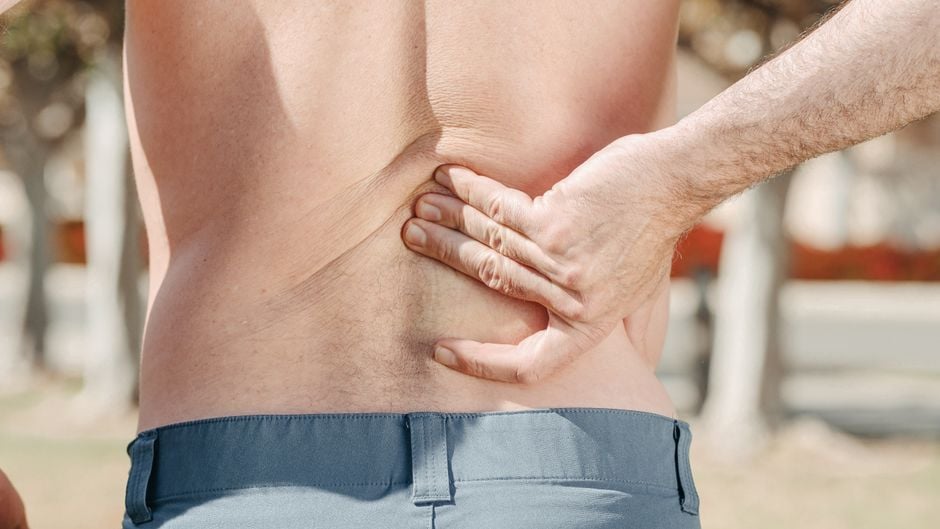
I spent about three months trying to talk myself out of buying an inversion table. The concept always felt a little gimmicky — hang upside down, feel better. It reminded me of the kind of thing you’d see in a late-night infomercial next to a SlapChop. But after my disc injury in 2012 left me with daily stiffness that no amount of stretching or PT seemed to fully address, I eventually caved and started actually reading the research on it. What I found was more nuanced than I expected.
This post covers what inversion therapy actually does to your spine, what the clinical evidence says, and who’s most likely to benefit — or get hurt — from using one. If you’re a desk worker with chronic lower back pain and you’ve been eyeing these machines on Amazon, read this first.
Key Takeaways
Inversion therapy temporarily decompresses the lumbar spine and can reduce disc pressure, but the effects are short-lived for most people.
The strongest evidence supports inversion for people with disc herniation causing sciatica — not general lower back aches.
One small but credible RCT found inversion therapy significantly reduced the need for surgery in patients with disc-related sciatica.
Inversion is not safe for people with high blood pressure, glaucoma, heart disease, or pregnancy.
Steep inversion angles aren’t necessary — 20–30 degrees is enough for spinal decompression without the cardiovascular risks of full inversion.
An inversion table works best as one tool among several — not a standalone fix.
What Is Inversion Therapy, Exactly?
The basic idea is mechanical: gravity compresses your spine all day. When you hang at an angle — or fully inverted — gravity pulls in the opposite direction and theoretically decompresses the discs and facet joints in your lumbar spine. An inversion table is just a padded platform you strap your ankles to, then tilt backward to whatever angle you want, typically anywhere from 20 degrees to fully upside down at 90 degrees.
People have been doing versions of this for centuries. Hippocrates reportedly had patients hung upside down by their ankles using a ladder system. The modern inversion table as a consumer product really took off in the 1980s. The question that matters is whether any of this actually works, and for what.
What Does the Research Actually Say?
Quick answer: The evidence is modest but real for a specific population — people with lumbar disc herniation causing leg pain (sciatica). For general, non-specific lower back pain from sitting too much, the evidence is weaker and mixed. A few studies show short-term symptom relief; none show it’s a long-term solution on its own.
The most-cited study is a randomized controlled trial published in Disability and Rehabilitation (Prasad et al., 2012). Researchers assigned patients with disc-related sciatica to either a physiotherapy program alone or physiotherapy plus inversion therapy. After six weeks, 23% of the inversion group required surgery, compared to 78% in the physiotherapy-only group. That’s a substantial difference, and it got a lot of attention. The study was small (64 patients), but the effect size was large enough to take seriously.
On the biomechanics side, a study from Newcastle University measured intradiscal pressure during inversion and found that hanging at around 60 degrees produced negative intradiscal pressure — meaning the disc was actually being pulled apart slightly, which is the theoretical mechanism for pulling herniated material back into place or reducing pressure on nerve roots. That matches what you’d predict from basic physics.
Other studies have looked at muscle EMG activity during inversion and found that back muscles relax significantly when inverted, which may explain why some people get immediate pain relief — you’re giving the paraspinal muscles a break from holding you upright, plus reducing the compressive load on the disc.
Where the evidence gets thin is for chronic non-specific low back pain — the dull, achy, I’ve-been-sitting-too-long variety. A few small trials show short-term pain reduction, but the control conditions are poor and the effects don’t hold up over time without continued use. In other words, it might make you feel better for a few hours, but it probably isn’t fixing anything structural if there’s no disc herniation involved.
The Disc Degeneration Case
My specific issue is disc degeneration at L4-L5 with a mild bulge. That’s not quite the same as an acute herniation with nerve compression, but it’s in the same neighborhood. My PT explained it this way: degenerated discs lose water content and height over time, which means less cushioning between vertebrae and more loading on the facet joints. Decompression might help by allowing the disc to rehydrate slightly and reducing facet joint irritation.
The rehydration idea is real — discs do absorb fluid when pressure is removed, which is why you’re slightly taller in the morning after lying down all night. Whether a 10-minute inversion session meaningfully adds to that is less clear. The biology works in theory; the clinical magnitude is uncertain.
What I noticed after a few weeks of using an inversion table at 30–40 degrees for 8–10 minutes in the morning: my morning stiffness improved. I can’t prove causality — I also started doing McGill‘s Big Three around the same time — but the combination seemed to help more than PT exercises alone had.
Who Should Not Use an Inversion Table
This part is important. Inversion increases intracranial pressure and blood pressure in your head and eyes. It’s not a minor effect. The contraindications are real:
Hypertension (high blood pressure): Inversion raises blood pressure. If yours is already elevated, this adds risk.
Glaucoma: Increased intraocular pressure from inversion can worsen glaucoma. This is a hard no.
Heart disease or arrhythmia: The cardiovascular changes from inversion can stress the heart.
Pregnancy: Obviously.
Retinal detachment risk: Same reasoning as glaucoma — increased ocular pressure.
Recent fractures or bone density issues: Your ankles and lumbar spine are under mechanical stress during inversion.
If you have any of these conditions, talk to your doctor before you even think about trying inversion therapy. This isn’t boilerplate liability hedging — the physiological mechanisms here are real and the risks aren’t trivial for susceptible people.
Does the Angle Matter?
Does the Angle Matter?
Quick answer: Yes — and less is usually enough. Research shows meaningful spinal decompression starts at about 20–30 degrees of inversion. Full 90-degree inversion is not necessary and carries more cardiovascular risk. Most people see similar back pain benefits at 30–60 degrees as at full inversion, with significantly less stress on the heart and head.
I started at 20 degrees for the first week — barely tilted, almost like just lying on a tilted surface. Then I gradually worked up to about 40 degrees, which is where I’ve stayed. The research on intradiscal pressure reduction suggests you get most of the benefit in that 40–60 degree range. Going fully upside down doesn’t meaningfully increase spinal decompression but does significantly increase intraocular pressure and the feeling of blood pooling in your head. For most people, there’s no good reason to go past 60 degrees.
How Long Per Session?
Most of the trials that showed positive results used sessions of 5–15 minutes, typically once or twice per day. Longer sessions don’t appear to produce proportionally better outcomes, and there’s some logic to that — the disc rehydration response probably saturates relatively quickly once pressure is removed. Going for 30+ minutes doesn’t add much and increases the cardiovascular load unnecessarily.
A reasonable starting protocol if you’re trying this for the first time: 3–5 minutes at 20–25 degrees, once per day, for the first week. See how your body responds — specifically whether you feel any increase in headache, eye pressure, or dizziness. If you tolerate it well, extend to 8–10 minutes and increase the angle incrementally over several weeks. Don’t rush to full inversion.
Which Inversion Tables Are Worth Buying?
The market runs from about $100 to well over $500. Build quality matters a lot here — you’re trusting ankle straps and a hinge mechanism with your entire body weight while inverted. I’d be cautious about the cheapest no-name tables. The ankle clamp quality especially varies, and a poorly designed clamp is uncomfortable even when it’s safe.
Three models I’d consider in different price brackets:
Teeter FitSpine X3
Teeter is essentially the brand that defines this category. The FitSpine X3 runs around $400–450 and comes with FDA 510(k) clearance as a Class II medical device for back pain relief — which isn’t a cure-all label, but it does mean it went through at least some regulatory scrutiny. The ankle lock system is genuinely comfortable compared to competitors I’ve tried, and the angle control is precise. The frame is solid steel and feels like it’ll last. If you’re serious about using inversion therapy regularly, this is the one I’d buy. Teeter also offers a 30-day return window, which matters for something this expensive.
Innova ITX9600
Around $200. Solid mid-range option with a padded backrest and adjustable headrest. The angle adjustments are handled by tether straps, which work fine but feel less precise than the Teeter’s mechanism. Ankle cuffs are comfortable for most people. It holds users up to 300 lbs. If you want to try inversion without spending $400, this is a reasonable starting point. The foam padding degrades faster than the Teeter’s over time, but for 2–3 years of regular use it holds up well enough.
Health Gear ITM5500
Around $300, and the distinguishing feature is built-in vibration massage nodes in the back panel. Whether that adds therapeutic value or just feels good is debatable, but if you like heat and vibration with your decompression, it’s a decent combination. The inversion mechanism itself is comparable to the Innova. The massage function runs on AC power, which means you need an outlet nearby — something to think about if you’re planning to use this in a garage or basement gym.
What Inversion Tables Won’t Fix
Worth being direct about this. If you spend eight hours sitting at a desk with poor posture, weak core muscles, and tight hip flexors, and then hang upside down for ten minutes, the ten minutes of decompression is not going to undo the other eight hours. Inversion therapy works best as a supplement to a broader approach: movement throughout the day, core strengthening, posture management, ergonomic setup.
I also haven’t seen credible evidence that inversion therapy helps with purely muscular back pain — the kind that comes from muscle strain or trigger points. For that, targeted massage, heat, and movement are more effective than decompression. Inversion is a disc and facet joint intervention. The mechanism doesn’t map onto muscle-based pain.
And if you have a serious structural problem — significant spinal stenosis, spondylolisthesis, or active nerve compression with neurological symptoms like foot drop — inversion could make things worse. Get a diagnosis and talk to a spine specialist before trying it.
Watch: Top 3 Exercises for Lower Back Pain
Video courtesy of Bob & Brad
Frequently Asked Questions
How long does it take for an inversion table to help back pain?
Most people who respond to inversion therapy notice some symptom improvement within two to four weeks of consistent daily use. Immediate relief after a session is common, but that tends to be temporary early on. Sustained benefit — if it comes — usually takes consistent use over several weeks combined with other treatments like physical therapy or core exercises.
Can inversion tables make back pain worse?
Yes, in some cases. People with spinal stenosis sometimes report increased symptoms after inversion, because decompression can shift load in ways that aggravate already narrowed spinal canals. Anyone with spondylolisthesis (where one vertebra slips over another) should be cautious — increased traction may worsen instability. Start at low angles and short durations, and stop immediately if symptoms increase.
Is it safe to use an inversion table every day?
For most healthy adults without contraindications, daily sessions of 5–15 minutes at moderate angles (under 60 degrees) appear safe based on the available research. The studies showing benefit used daily protocols. That said, your tolerance is individual — if you notice persistent headaches, increased eye pressure, or any cardiovascular symptoms, reduce frequency or angle, or stop and consult a doctor.
Do inversion tables help with sciatica?
This is where the evidence is actually strongest. The 2012 Prasad trial specifically enrolled patients with disc-related sciatica and found significantly reduced surgical rates in the inversion group. If your sciatica is caused by lumbar disc herniation compressing a nerve root, inversion-based decompression has at least a plausible mechanism and some clinical support. It doesn’t work for everyone, but it’s worth discussing with your doctor if surgery is being considered.
What’s the difference between an inversion table and traction therapy?
Mechanically they’re doing similar things — applying a distracting force to the spine to reduce disc pressure. The difference is control and setting. Clinical traction is administered by a physical therapist or on a specialized device with precise force measurement. An inversion table uses your own body weight and gravity, with the angle as the only variable. Clinical traction is more controlled; inversion therapy is more accessible for home use. Both have similar evidence profiles for disc-related pain.
My Honest Assessment
I’ve been using an inversion table — the Teeter FitSpine — for about a year now. It’s part of my morning routine: 10 minutes at 40 degrees while I wake up, followed by McGill’s Big Three. I can’t isolate how much of my improvement is attributable to inversion versus the exercises versus the improved ergonomic setup at my desk. That’s the honest answer. But the combination works better than anything I tried individually, and on the days I skip the inversion, my morning stiffness does seem worse.
If you have disc degeneration or herniation-related sciatica, no contraindications, and you’ve been dealing with chronic lower back pain long enough to be reading articles like this one — an inversion table is worth trying. The evidence isn’t definitive, but it’s real enough. Get a table with good ankle support, start gentle, and treat it as a supplement to a broader back care approach, not a cure. That framing will keep expectations accurate and use patterns safe.
Products Mentioned
As an Amazon Associate, I earn from qualifying purchases. These links help support the site at no extra cost to you.