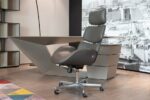
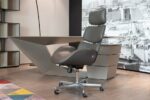
I’ve spent time in both chairs. The Aeron for about three years at a previous job, the Embody at home after I finally justified the purchase to myself around 2019. I also have disc degeneration at L4-L5 from a 2012 back injury, so this comparison isn’t academic for me — it’s personal.
If you’re trying to decide between these two Herman Miller chairs specifically for back pain, the honest answer is: it depends on what your back actually needs. That’s not a cop-out. These two chairs are built on genuinely different design philosophies, and those differences translate into very different sitting experiences depending on your specific problem.
Key Takeaways
The Aeron has a more structured, mechanical lumbar system. The Embody has a flexible spine-mimicking backrest. Neither is universally better.
People with lumbar disc issues often do better in the Aeron. People with thoracic tightness or upper-back tension frequently prefer the Embody.
Seat pan design is a real differentiator: the Aeron’s mesh seat can cause pressure issues for some people; the Embody’s foam-and-pixel seat distributes load more evenly.
Neither chair fixes bad posture habits. Both chairs support good posture when adjusted correctly.
If you can try both before buying, do it. Showrooms exist. An hour in each chair will tell you more than any review.
What Each Chair Is Actually Trying to Do
The Aeron has been around since 1994. The core idea was to get away from foam cushions, which compress over time and don’t breathe, and replace them with mesh that conforms to the body and allows airflow. The lumbar support on the Aeron is handled by a PostureFit SL mechanism — two pads that independently support the sacrum and lumbar spine. You dial in the tension yourself. It’s a deliberate, mechanical approach to keeping your lower back in its natural curve.
The Embody came out in 2008 and was designed with a different premise. Herman Miller worked with medical researchers to build a backrest that actually moves with you as you shift and fidget. The central spine of the backrest is meant to flex and pivot, and the back itself is made of a pixelated surface that distributes pressure across a wider area. The idea is less about fixing your posture in place and more about supporting your back through a range of positions.
Both approaches are legitimate. The question is which one works for your body and your pain pattern.
Lumbar Support: Aeron vs Embody
Quick answer: The Aeron gives you firmer, more targeted lumbar support through adjustable mechanical pads. The Embody provides broader, more distributed back contact. If your pain is specifically in the lower lumbar region and you know you need a defined lumbar curve reinforced, the Aeron’s PostureFit SL is easier to dial in. If your pain is more diffuse or you have trouble staying in one position, the Embody’s adaptive backrest tends to feel less fatiguing over long sessions.
The Aeron’s PostureFit SL is genuinely good. You can adjust the sacral support and the lumbar pad independently, which matters if your natural lumbar curve doesn’t line up perfectly with where a fixed pad would sit. I found it well-positioned for my L4-L5 issues — it gives you something to lean into rather than having your lower back sag into a void.
The Embody doesn’t have an adjustable lumbar pad in the traditional sense. The backrest itself is meant to be the lumbar support — it flexes, the pixels compress where your back contacts them, and the overall shape maintains a light curve. For some people, that’s ideal because the chair moves with them. For others, particularly people who need firm, consistent pressure at a specific lumbar level, it can feel insufficient.
If you’ve ever used a lumbar roll or a small pillow behind your lower back and found it helpful, the Aeron’s PostureFit SL is closer to what you already know works for you. If lumbar pillows feel too poky or too rigid, you might find the Embody more comfortable.
Seat Pan and Pressure Distribution
This is where I think most back-pain comparisons undersell the Embody. The seat matters as much as the back, and these chairs are very different here.
The Aeron seat is mesh stretched over a hard frame. Mesh is breathable and doesn’t bottom out, but the frame edge creates a defined pressure zone right at the back of your thighs. For some people, especially those who sit for 6–8 hours straight, that edge becomes uncomfortable. It can affect circulation, and it can create referred tension up through the glutes and lower back. If you sit on the Aeron and feel like you need to shift your weight constantly after 90 minutes, this is probably why.
The Embody uses a layered foam and elastic seat that Herman Miller calls the “Pixelated Support” system. It distributes weight more evenly, and the foam layer softens the contact between your thighs and the seat frame. In my experience, I can sit in the Embody for longer before I feel the need to get up and move around. Whether that’s good or bad is debatable — movement breaks are actually important for disc health — but it’s real.
If you have sciatica or piriformis issues, the Embody’s seat tends to be kinder. If you run warm and hate sweating through your seat after an hour, the Aeron mesh wins easily.
Upper Back and Thoracic Support
Desk workers with rounded shoulders and forward head posture often have thoracic pain — that ache between the shoulder blades that shows up after a long day of typing. This is where the Embody has a real edge.
The Embody’s backrest extends higher and wraps slightly, making contact with more of your upper back. Because it flexes with you, it also provides some resistance when you lean into it, which can help you maintain a more upright thoracic posture without actively thinking about it.
The Aeron’s backrest is narrower at the top and doesn’t extend as high. It’s primarily designed for lumbar support. If you’re someone who leans back and wants something to support your whole spine, you may find the Aeron leaves your upper back unsupported in ways that compound thoracic tension over time.
This doesn’t mean the Aeron is bad — it just means it has a different design focus. If your pain is predominantly lumbar and your upper back is fine, it won’t matter. If you deal with both lumbar and thoracic issues, the Embody covers more ground.
Which Chair Works Better for Specific Back Conditions?
Quick answer: For lumbar disc problems (herniation, degeneration, or stenosis), the Aeron’s structured PostureFit SL typically performs better. For general desk-worker fatigue, muscle tension, thoracic pain, or diffuse lower back aching, the Embody’s adaptive backrest and better pressure distribution tend to edge it out. These aren’t rules — individual anatomy varies — but they’re the patterns I hear consistently from people who’ve used both.
Lumbar disc issues (herniation, degeneration)
Lean toward the Aeron. The PostureFit SL gives you active support for the lumbar curve, which reduces load on the posterior disc structures when adjusted correctly. The key is actually setting up the PostureFit — a lot of people buy an Aeron and never properly adjust the lumbar mechanism, which defeats the point.
Muscle tension and fatigue (the diffuse ache from long days)
The Embody tends to win here. Because it distributes load across a wider contact area and the backrest flexes with your movement, muscle tension builds up more slowly. It’s also worth noting that the Embody’s design philosophy aligns with what physical therapists say about static posture: the best sitting position is one that changes slightly throughout the day, not one that’s perfectly fixed and never moves.
Sciatica
If the sciatica is aggravated by seat pressure (piriformis-related or from disc compression), the Embody seat tends to be gentler. If it’s primarily aggravated by losing lumbar curve and flattening the lumbar spine while sitting, the Aeron’s PostureFit SL may help more. Sciatica is heterogeneous — what triggers it varies a lot from person to person.
Thoracic pain and upper back tightness
The Embody by a reasonable margin. The higher, wider backrest with more upper-back contact addresses the thoracic region the Aeron mostly ignores.
Adjustability and Setup
Both chairs have a solid range of adjustability — seat height, armrests (4D on both), seat depth, back tension. The Aeron also lets you adjust the PostureFit SL independently for sacral and lumbar support. The Embody lets you adjust the backrest pivot tension and the recline limiter.
The Aeron is available in three sizes: A (small), B (medium), and C (large). Getting the right size matters enormously. An Aeron B that fits a 140-pound person will not fit a 220-pound person well, and the wrong size affects lumbar support positioning in ways that can make the chair actively worse for your back.
The Embody is one size, but the seat depth adjustment gives it a wider range of accommodation than the single-size description suggests.
One practical note: both chairs reward time spent actually adjusting them. Most people who are disappointed with an ergonomic chair sat in it at the wrong settings. I’d estimate 20–30 minutes of careful setup, ideally with a reference guide or a showroom demo, makes a real difference to how either chair feels for your back.
Price and Value
At time of writing, the Aeron (size B, fully loaded) runs around $1,600–$1,900 new from Herman Miller directly. The Embody is similar — roughly $1,800–$2,000 with the standard spec. There’s sometimes a gap of $100–$200 between them depending on configuration, with the Embody typically running slightly higher.
Both have 12-year warranties, which is genuinely meaningful. These chairs hold up. I’ve sat in Aerons from the early 2000s that were still functioning fine. The used market for both is active and reasonably priced — you can find well-maintained Aerons for $400–$700 and Embodys for $600–$900 if you’re willing to search. If budget is a real constraint, this is worth considering. Herman Miller’s own Certified Refurbished program is also legitimate.
What the Research Actually Says About Chair Selection and Back Pain
There’s surprisingly little high-quality research comparing specific chair models head-to-head for back pain outcomes. Most ergonomics research talks about categories of features — lumbar support presence, seat pan depth, armrest positioning — rather than brand versus brand. A 2025 BBC piece summarizing current evidence on posture and back health made the point that “perfect posture” is largely a myth, and that movement variety matters more than finding the perfect static position. That tracks with what I’ve observed: neither the Aeron nor the Embody is going to fix back pain if you sit perfectly still for 8 hours without getting up.
The WalkBack trial published in The Lancet in 2024 showed that progressive walking combined with education was more cost-effective at preventing back pain recurrence than most clinical interventions. I mention this not to undercut the value of a good chair, but to provide context: the chair is part of the equation, not all of it. Regular movement breaks, some daily walking, and reasonable core strength all matter alongside whatever you’re sitting in.
The chair supports good sitting mechanics. It doesn’t compensate for too much sitting.
Watch: Top 3 Exercises for Lower Back Pain
Video courtesy of Bob & Brad
Frequently Asked Questions
Which chair is better if I have lower back pain from a disc problem?
The Herman Miller Aeron tends to be the better fit for disc-related lower back pain. Its PostureFit SL mechanism actively supports the lumbar curve at two points — the sacrum and lumbar spine — which helps reduce compressive load on the posterior disc structures. That said, proper sizing and setup are essential. An incorrectly adjusted Aeron won’t help, and the wrong size can make things worse.
Is the Embody worth the extra cost over the Aeron?
If your pain is primarily in the upper back or you sit for very long sessions and struggle with pressure buildup and fatigue, the Embody may be worth the premium. If your issue is strictly lumbar and you run warm at your desk, the Aeron is probably the better value. The price difference is usually small enough that it shouldn’t be the deciding factor — the fit for your specific back problem matters more.
Can I try these chairs before buying?
Yes, and you should. Herman Miller has showrooms in most major cities, and many authorized dealers have both chairs on the floor. Sit in each for at least 20–30 minutes with proper setup help from a sales rep. One hour of real testing will tell you more than any review, including this one. Online purchases with return policies are also possible, but returning a $1,800 chair is inconvenient enough that a showroom visit is usually worth the trip.
Will either chair fix my back pain on its own?
Unlikely, if the pain is chronic. A good ergonomic chair reduces aggravating factors — poor lumbar support, pressure points, bad posture mechanics — but it doesn’t address muscular weakness, movement habits, or underlying structural issues. A chair is one variable in a larger equation that usually includes movement breaks, some physical training, and for some people, treatment from a physical therapist.
Are there good used options for either chair?
Yes. Both chairs have active secondary markets and well-documented parts availability. Used Aerons in good condition can be found for $400–$700; used Embodys typically run $600–$900. Herman Miller’s own Certified Refurbished program is the safest used option. If you’re buying from a private seller or reseller, check that the lumbar mechanism and armrests still function correctly before purchasing.
The Bottom Line
If I had to pick one sentence: the Aeron is better for targeted lumbar disc support, and the Embody is better for whole-back comfort over long sessions and thoracic pain.
For my specific situation — L4-L5 degeneration, sitting 7–8 hours a day — I’ve gotten more consistent pain reduction from the Embody over the years, but I know people with similar diagnoses who strongly prefer the Aeron’s PostureFit SL. Bodies differ. Pain patterns differ.
If you’re on the fence, here’s a practical approach: figure out where your pain is worst (lower lumbar vs. more diffuse or upper), consider whether you run hot at your desk (Aeron wins on breathability), and get to a showroom if at all possible. Both chairs are genuinely good. You’re really trying to find which one is right for your back — and that’s a question only your back can fully answer.